Electrical Extensions
I mainly carry out extensions and improvements to existing electrical installations.
This can be an additional supply for air conditioning, a new circuit for outdoor use, improving an electrical panel, adding protection devices, or making an existing connection neater and safer.
My approach is practical and precise: first understand what is already there, then make the change. I prefer calm, measurable work over fast and unclear work.
What I Usually Do
- New circuits for air conditioning, outdoor units, workshops or technical rooms.
- Improvements in and around the electrical panel.
- Installation of circuit breakers, differential switches and local isolators.
- Outdoor sockets, local isolators and technical supplies.
- Repairing or improving existing connections.
- Checking earth, continuity and protection devices.
- Cleaner routing, fixing and protection of cables.
I mainly work on existing installations that need to be extended or improved. When a full mise en conformité or a wider renovation of the whole installation is needed, I discuss that separately. I do not make absolute claims about the full compliance of an existing installation if I have not been able to open, trace and measure everything.
Measuring Is Knowing
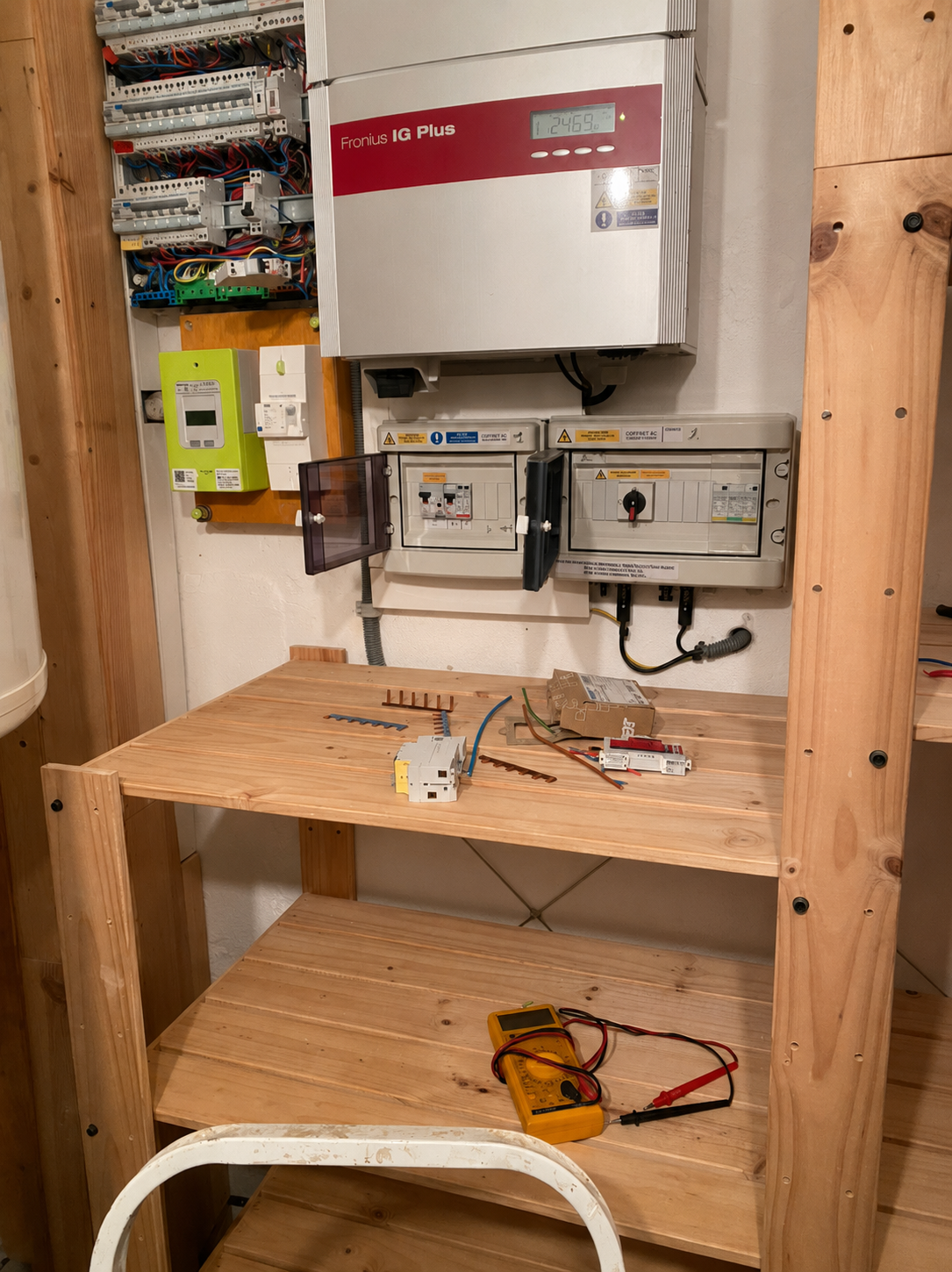
After electrical work, I do not only want to see that something functions; I also want to measure whether the basics are correct.
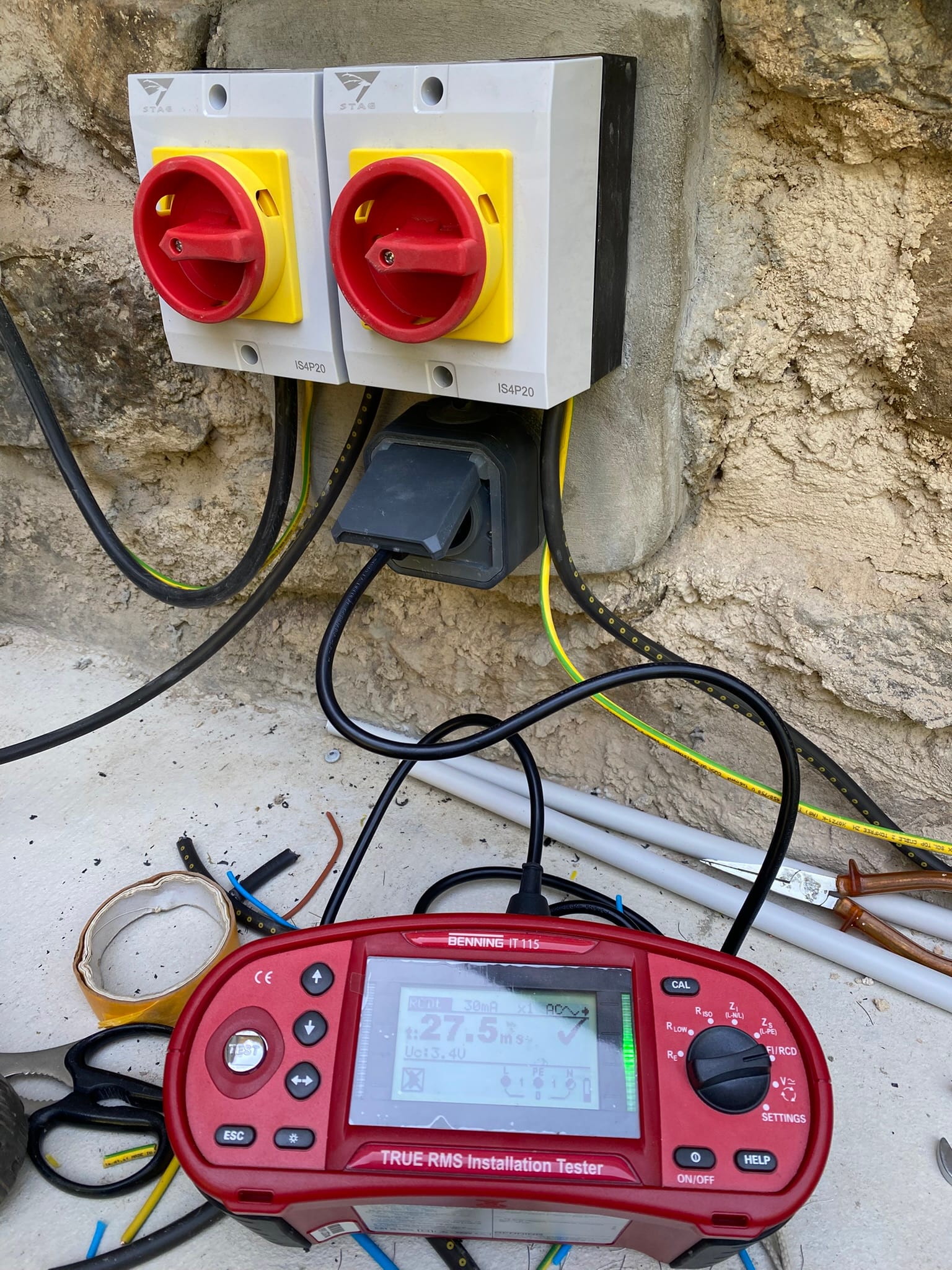
With my Benning installation tester, I check among other things:
- the presence and quality of the earth connection
- continuity of the protective conductor
- operation and trip time of differential protection devices
- voltage and polarity
- loop impedance where relevant
- whether a new circuit is connected logically and safely
These measurements are important, especially in existing homes in the Ardèche. Installations have sometimes been modified in several periods, and what is visible is not always enough to understand how everything is actually connected.
Extending Safely
When adding an extension, I do not only look at the new cable or the new socket.
I also check whether the protection is logical, whether the earth is present, whether the cable size matches the use and whether the new circuit remains clear for future maintenance.
Improving Without Overdoing It
Not every existing installation needs to be completely replaced.
Often, a targeted improvement is enough: better protection, a clear local isolator, a dedicated circuit, a neat cable route or an old connection finished correctly again.
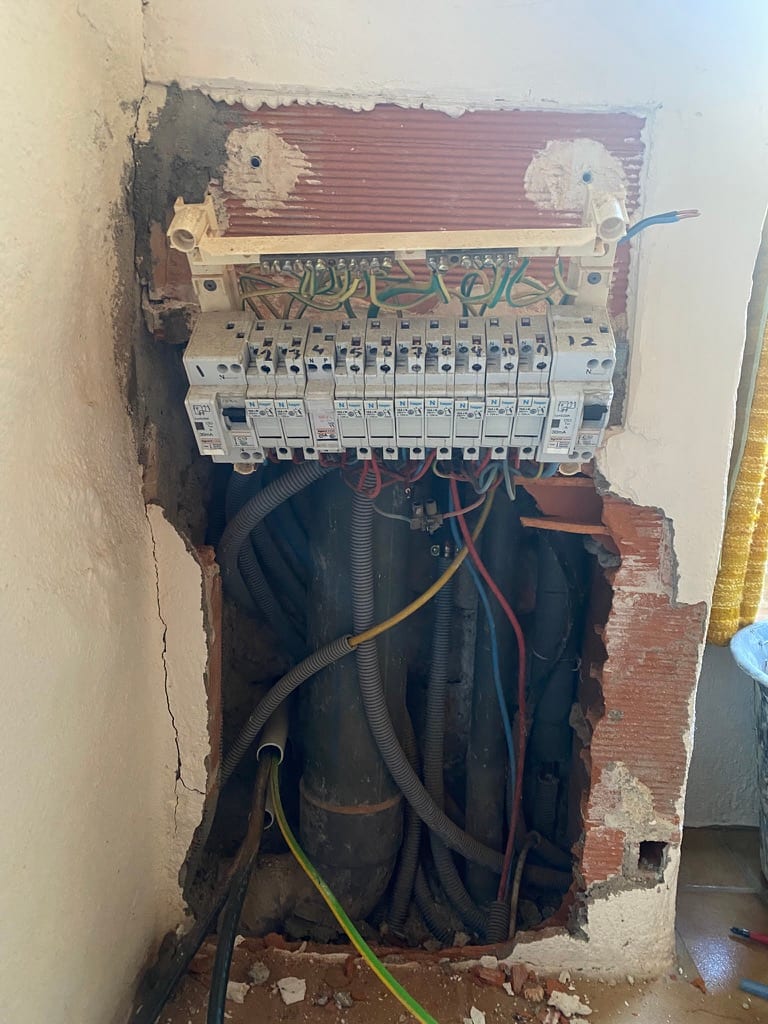
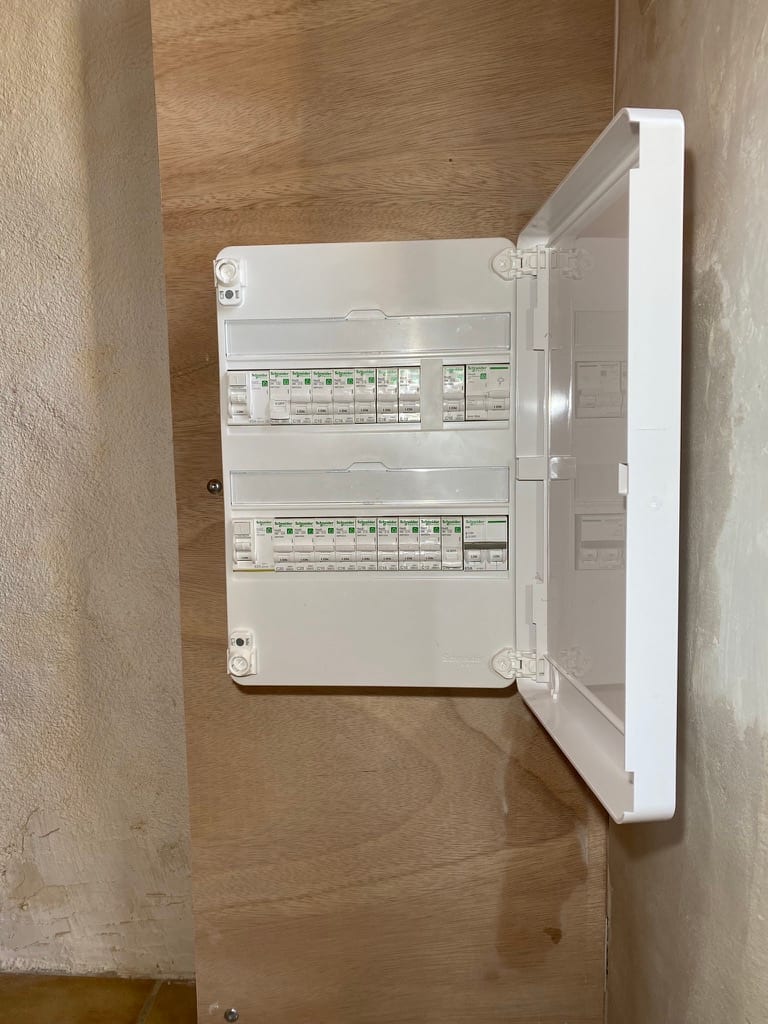
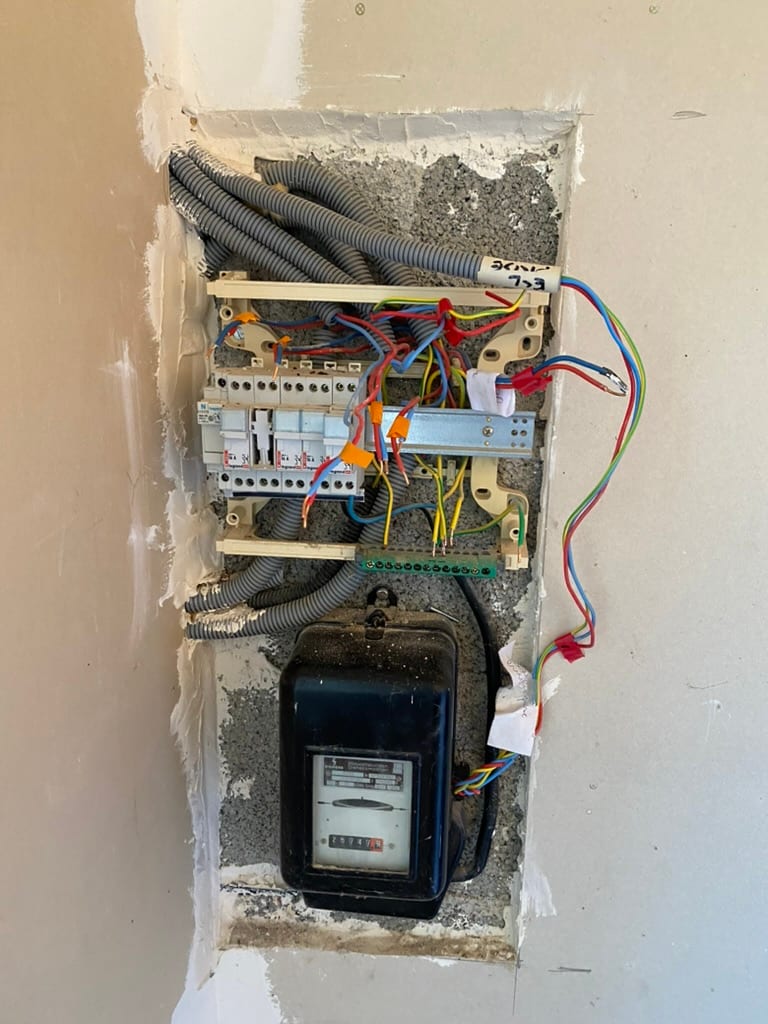
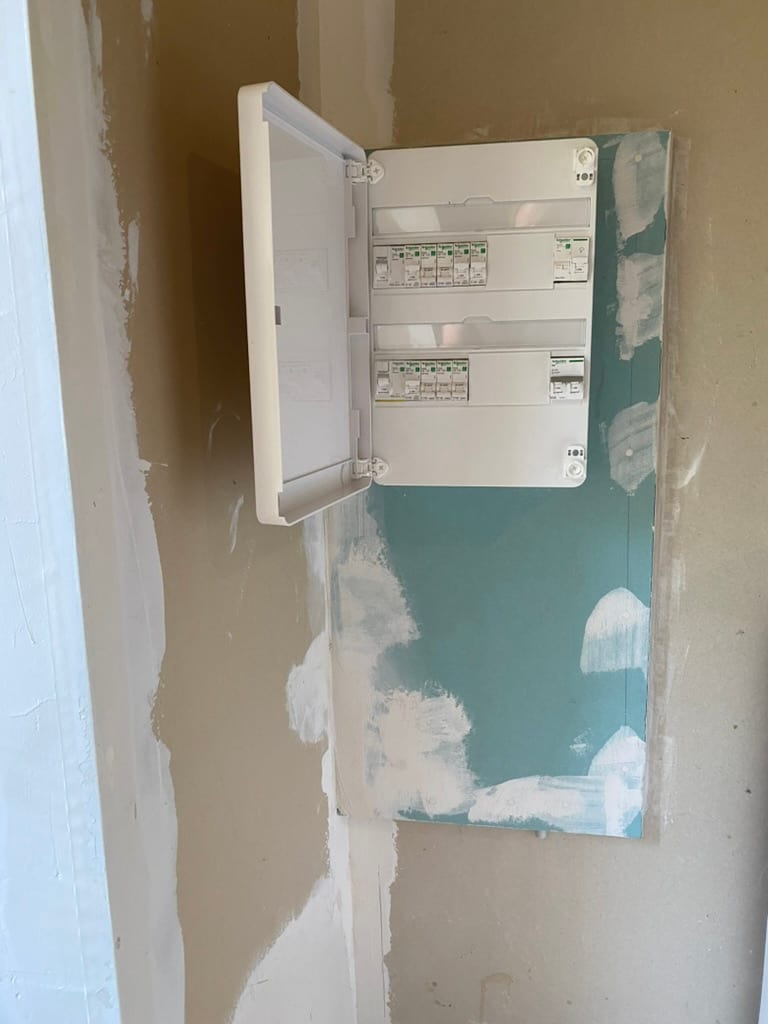
Before and After
With electrical work, the difference is often clearly visible: a messy or unclear situation becomes easier to understand, better protected and easier to maintain.
Below are two examples, each with a photo before and after the work:
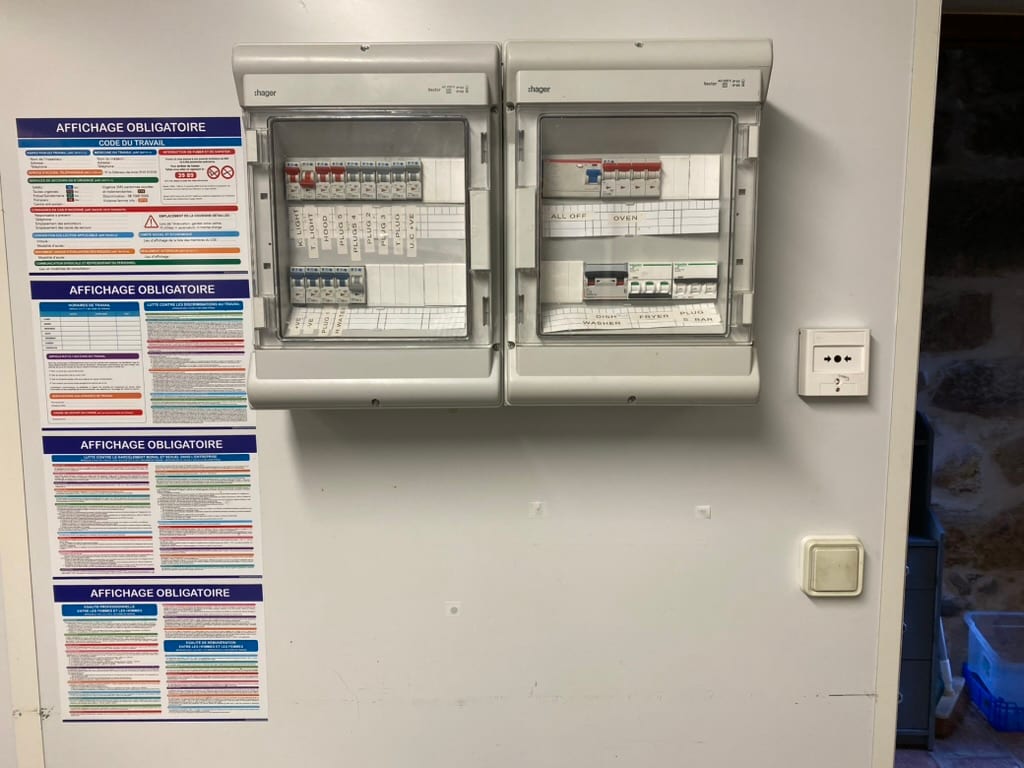
- an improvement in or around an electrical panel
- replacing an old, unclear situation with a new, tidy panel
Working Method
First, I look at the existing situation and discuss what is needed. Then I decide how the cables can run most logically, which protection matches the use and which parts of the existing installation need extra attention.
During the work, I keep the installation as clear as possible. Cables are fixed properly, penetrations are made neatly and outdoor material is chosen according to the conditions.
Afterwards, I check the new connection and measure the important points. If I see something outside the scope of the job but important for safety or reliability, I point it out clearly.
Realistic Approach
With existing installations, the difference between mise en sécurité and mise en conformité is important.
A targeted improvement can make an installation safer and more reliable, without automatically declaring the whole home compliant. If wider issues are visible, I explain what I see and what I think is the sensible next step.
This keeps the work clear, technically correct and honest.
Also For Businesses